

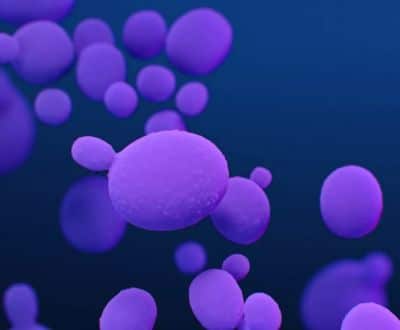
Candida auris (C. auris) is an emerging yeast that has become a serious infection-control problem because it can be hard to treat, hard to identify, and—most importantly for cleaning teams—easy to spread in healthcare environments and able to persist on surfaces. Outbreaks most often occur in hospitals, long-term acute care hospitals, skilled nursing facilities, and other settings where patients are medically complex and share equipment, staff, and spaces. CDC
This article covers the basics of C. auris, how it spreads in healthcare settings, and practical disinfecting protocols—plus how to use the EPA’s List P to choose products proven to kill C. auris when used correctly.
Key official resources (links):
- CDC Infection Control Guidance: https://www.cdc.gov/candida-auris/hcp/infection-control/index.html CDC
- EPA List P (products effective against Candida auris): https://www.epa.gov/pesticide-registration/epas-registered-antimicrobial-products-effective-against-candida-auris-list US EPA
What is Candida auris—and why is it a big deal?
C. auris can cause severe illness in vulnerable patients, particularly those with significant underlying conditions and invasive medical devices (like central lines, breathing tubes, feeding tubes, or urinary catheters). CDC
A major challenge is that many people can carry C. auris on their skin or other body sites without symptoms—this is called colonization. Colonized patients may feel fine, but they can still spread the organism in the facility just like infected patients can. CDC+1
What makes C. auris uniquely difficult operationally is its combination of:
- Environmental persistence: it can survive on surfaces for a long time. CDC+1
- Transmission via contact: it can contaminate bedrails, doorknobs, and shared equipment (e.g., blood pressure cuffs), facilitating spread to others. CDC+1
- Disinfectant gaps: not all disinfectants used routinely in healthcare reliably kill it, so facilities must choose products intentionally. CDC+1
How C. auris spreads in healthcare environments
In most outbreaks, transmission is driven by contact:
- A patient is infected or colonized.
- The organism is shed onto surfaces and objects nearby (bedrails, doorknobs, medical equipment, etc.).
- Staff, other patients, or shared equipment come into contact with those contaminated surfaces.
- C. auris moves to new patients—sometimes silently—because colonization can last weeks, months, or longer. CDC+2CDC+2
Outbreaks often begin when someone who acquired C. auris in one facility is admitted or transferred to another, which is why communication during transfer is emphasized in CDC guidance. CDC+1
The disinfecting “non-negotiables” for C. auris
Disinfecting for C. auris is not just “wipe things down.” It’s a system: correct product + correct process + correct frequency + correct verification.
1) Use a disinfectant proven to kill C. auris
The CDC recommends using disinfectants with EPA-registered claims for C. auris (i.e., products on EPA List P). CDC+1
Worldwide Janitor carries Diversey Oxivir 1 wipes, which are on EPA list P, and have the fastest kill time for Candidia Auris out of all disinfecting options.
EPA List P exists because EPA reviews required lab testing data demonstrating those products kill C. auris when used as directed. US EPA
EPA List P link:
https://www.epa.gov/pesticide-registration/epas-registered-antimicrobial-products-effective-against-candida-auris-list US EPA
2) Follow the label—especially contact time
Even the right product can fail if it’s used wrong. EPA highlights that effectiveness depends on how you use the disinfectant and stresses following label directions for C. auris, including the contact time (how long the surface must remain wet). US EPA
3) Clean first when surfaces are dirty
If a surface has visible soil or organic material, you need a cleaning step before disinfection. This is a core principle of environmental hygiene and is frequently included in C. auris outbreak control recommendations (soil can physically block disinfectants from contacting the organism). MDPI+1
4) Do daily + terminal cleaning—and don’t forget shared equipment
CDC notes that C. auris can survive on surfaces for weeks and recommends thorough daily and terminal cleaning and disinfection of rooms for patients with C. auris. Shared medical equipment and procedure rooms also need thorough cleaning and disinfection after use. CDC
Practical disinfecting protocol for C. auris (step-by-step)
Below is a straightforward protocol many facilities adapt into EVS checklists, training, and audits.
Step A: Identify the “high-risk” targets
Focus attention on:
- High-touch surfaces: bedrails, call buttons, overbed tables, doorknobs, light switches, bathroom fixtures, chair arms, etc. CDC+1
- Shared equipment: blood pressure cuffs, glucometers, IV poles, mobile workstations, thermometers, lifts, etc. CDC+1
Step B: Choose an EPA List P product and prepare correctly
- Go to EPA List P. US EPA
- Verify your product is on the list using its EPA Reg. No. (on the label). EPA explains how to match the registration number and notes that supplemental distributor numbers represent equivalent products. US EPA
- Train staff on:
- dilution (if applicable),
- dwell/contact time,
- surface compatibility,
- wipe technique and wetness maintenance.
Step C: Clean, then disinfect (don’t combine unless your product is labeled for it)
- If visibly dirty: remove soil with a cleaner (or a labeled cleaner-disinfectant used in a cleaning step), then apply disinfectant.
- Apply disinfectant so the surface stays visibly wet for the full contact time listed for C. auris. US EPA
Step D: Frequency (minimum standard in patient-care areas)
- Daily cleaning & disinfection for the room and bathroom.
- Terminal cleaning at discharge/transfer, with heightened detail (often two-person teams or a structured top-to-bottom workflow).
- After every use for shared equipment and procedure areas. CDC+1
A helpful general principle for terminal cleaning workflow is to proceed systematically through zones and high-touch surfaces rather than randomly (CDC environmental cleaning procedures discuss structured approaches to terminal cleaning). CDC
Step E: PPE and hand hygiene still matter
Environmental disinfection works best when paired with core infection control measures. CDC emphasizes hand hygiene (alcohol-based hand sanitizer when hands are not visibly soiled; soap and water when they are) and the appropriate use of gowns and gloves for patient care activities. CDC+1
How to use EPA List P effectively (without getting lost)
EPA List P is not just a product list—it’s also a verification and use framework:
- Confirm the product is actually List P: Match the “EPA Reg. No.” from the label to the list. US EPA
- Don’t assume “fungicidal” equals effective: CDC notes that products with Candida albicans or general fungicidal claims may not be effective against C. auris, which is why C. auris-specific EPA claims matter. CDC
- Obsess over contact time: EPA explicitly calls this out—different pathogens can have different directions and dwell times, and you must follow the C. auris directions. US EPA
A short checklist you can turn into SOP language
C. auris Disinfecting SOP (facility template):
- Use an EPA List P disinfectant for routine and terminal disinfection in areas exposed to C. auris. CDC+1
- Verify product via EPA Reg. No. and train staff on label directions. US EPA
- Clean visibly dirty areas before disinfection. CDC
- Keep surfaces wet for the full contact time on the label for C. auris. US EPA
- Disinfect shared equipment after every use. CDC+1
- Perform daily + terminal cleaning with special attention to high-touch surfaces. CDC
Bottom line
C. auris control succeeds when the facility treats environmental disinfection as a precision process—not a generic cleaning routine. The winning formula is:
1) identify risk areas → 2) use EPA List P products → 3) clean first when needed → 4) hit the full contact time → 5) repeat daily + terminal + after shared equipment use → 6) audit for compliance.